Iran Re-Closes Hormuz as U.S. Blockage Ignites Global Oil Crisis


The fragile two-week peace has shattered. As of April 19, 2026, the "double-sided ceasefire" brokered by Pakistan will officially end on 22 April. Tehran responded by once again closing the Strait.
Less than two hours before his own deadline, President Trump announced a two-week suspension of planned U.S. attacks on Iranian infrastructure on April 8, 2026. Oil prices dropped sharply. Stock futures jumped. For a moment, markets breathed a sigh of relief. Then reality set in.Here is the most up-to-date picture as of April 19, 2026 eleven days into the fragile ceasefire and what traders need to watch next.
The Ceasefire Announcement (April 8 Recap)
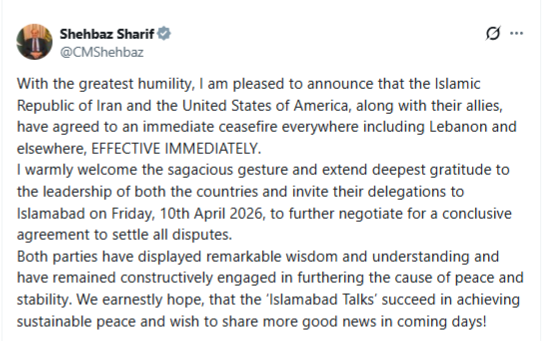
President Trump posted on Truth Social that the U.S. would suspend strikes for two weeks, calling it a “double-sided CEASEFIRE.” The deal was brokered by Pakistan’s Prime Minister Shehbaz Sharif and Field Marshal Asim Munir. The key condition: immediate, safe reopening of the Strait of Hormuz for commercial shipping. Pakistan played a decisive diplomatic role. Prime Minister Shehbaz Sharif and Field Marshal Asim Munir acted as neutral mediators between Washington and Tehran. Islamabad hosted the first round of talks on April 10–11.
After a marathon 21-hour session, the negotiations collapsed without a deal on April 12. U.S. Vice President JD Vance, leading the delegation, stated Iran refused to accept key U.S. terms, particularly on its nuclear program. Vance left Islamabad saying the U.S. had made its “final and best offer.”Pakistan continues pushing for a second round, but no new date has been set. The two-week ceasefire is now in its final days and expires around April 21–22.
As of April 19, 2026, the situation has taken a more complex turn. Iran has once again moved to restrict access through the Strait of Hormuz, citing continued U.S. maritime pressure and port blockades. The development does not represent a sudden escalation, but rather a reassertion of leverage in a conflict that was never structurally resolved.
The market is now entering a phase where initial optimism is being tested against underlying reality.
A Ceasefire Without Resolution
The April 8 announcement by Donald Trump was framed as a “double-sided ceasefire,” temporarily halting U.S. military action while opening space for negotiations. However, from the outset, the arrangement was tactical rather than transformational. Key disagreements particularly around nuclear policy, sanctions, and regional influence remained unresolved. The negotiations that followed in Islamabad ultimately failed to produce a framework acceptable to both sides. Public statements from Washington and Tehran reflected this disconnect, with each side framing the outcome as validation of its own position. In this context, the ceasefire functioned less as a step toward resolution and more as a temporary pause in active escalation.
Market Reaction
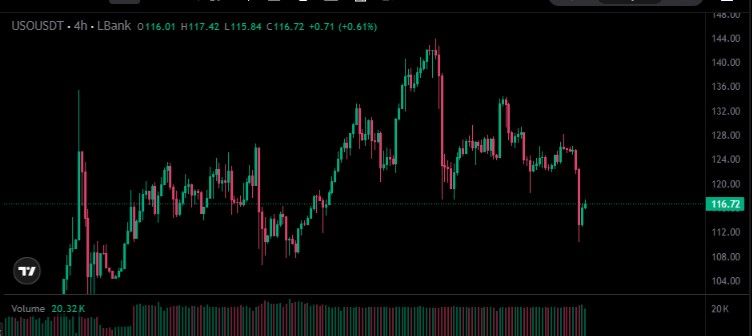
The initial decline in oil prices following the ceasefire announcement was both sharp and decisive. Brent crude fell below $90 per barrel, while WTI moved toward the low $80s. Equity markets responded positively, reflecting reduced immediate risk. Yet this reaction was driven more by positioning than by structural change. The underlying dynamics of the oil market have not materially improved. Supply constraints remain in place, geopolitical risk has not been eliminated, and the mechanisms through which disruption occurs particularly in key transit routes are still active. As a result, the current price stability around the $90 range may not represent equilibrium, but rather a temporary balance between competing expectations.
Markets are, in effect, waiting for confirmation.
The Critical Window Ahead
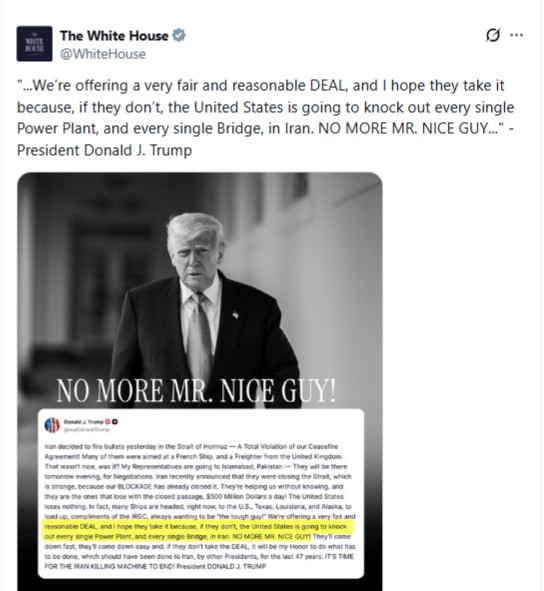
The ceasefire agreement is set to expire on 22 April, placing the market in a highly sensitive position. Without an extension or a credible diplomatic breakthrough, the probability of renewed escalation increases significantly. At the same time, signals from both sides suggest limited flexibility. The United States continues to enforce restrictions on Iranian shipping, while Iran has demonstrated a willingness to respond through maritime control. For traders, this is not a typical macro environment. It is an event-driven landscape where timing, access, and execution become critical variables.
Do not trade the headlines as resolution
From a structural perspective, the market misread the ceasefire.This was never a peace agreement. It was a time-buying mechanism.
The core issues remain untouched:
- Iran’s nuclear positioning
- U.S. sanctions and enforcement
- Regional military balance
- Control over strategic routes like the Strait of Hormuz
None of these were resolved only temporarily paused.cWhat we are seeing now is not a “new escalation,” but rather a continuation of the same conflict under a different phase. The re-closure of Hormuz confirms that both sides are still actively using leverage. The U.S. continues economic pressure through blockades, while Iran is responding through maritime control.
What to Watch Next (April 20–27)
The coming days represent one of the most sensitive periods since the conflict began. The two-week ceasefire is set to expire around April 21–22, and there is still no confirmed extension. At the same time, diplomatic signals remain mixed, and military positioning has not eased.
Instead of listing everything mechanically, focus on four core triggers that will drive the market:
1. Ceasefire Extension or Collapse
This is the primary catalyst. An extension could temporarily stabilize oil and risk assets. A collapse, especially combined with Hormuz restrictions, would likely trigger a sharp upside move in oil and renewed volatility across global markets.
2. Pakistan-Led Diplomatic Breakthrough (or Failure)
Watch closely for any outcome from Pakistan’s mediation efforts. A second round of talks or even confirmation that talks are scheduled could shift sentiment quickly. The absence of progress, however, increases the probability of escalation.
3. Hormuz Operational Status (Not Statements, Reality)
Ignore official claims. Focus on actual shipping flow, tanker movement, and enforcement actions. The market reacts to real disruption, not political messaging.
4. U.S. Positioning and Statements
Recent rhetoric suggests frustration is rising. Any shift from negotiation language to enforcement or retaliation signals will likely accelerate market reactions.
This is not a slow macro setup anymore. This is a headline-driven trigger environment.
Trading in an Event-Driven Market
In this environment, conventional approaches to trading require adjustment. Strategies that rely on gradual trend development may struggle to adapt to sudden shifts, while those designed for breakout conditions and volatility expansion are likely to perform more effectively. Access to continuous markets, efficient margin systems, and reliable execution can significantly influence outcomes when conditions change rapidly.
This is where solutions like LBank’s CFD offering begin to differentiate themselves. By enabling trading across commodities, forex, and indices within a unified margin system, and integrating with professional tools such as MT5, the platform is structured to support precisely the kind of environment currently unfolding. Rather than reacting after the fact, traders are able to position, adjust, and execute in real time. Because in markets like this, being right is not enough. You have to be able to act immediately.
Future Scenarios - Mapping the Probabilities
At this stage, the market is not pricing a single outcome. It is balancing multiple scenarios each with very different implications.
Scenario 1: Ceasefire Extension (Low–Moderate Probability)
Negotiations resume under Pakistan’s mediation, and both sides agree to extend the pause.
This would likely:
- Stabilize oil in the short term
- Reduce immediate volatility
- Create a temporary “risk-on” environment
However, unless a deeper agreement is reached, this simply delays the next cycle.
Scenario 2: Controlled Escalation (High Probability)
The ceasefire expires, but both sides avoid full-scale conflict while continuing pressure tactics.
- Hormuz remains partially restricted
- Oil trends higher with volatility spikes
- Markets become extremely reactive to news
This is the most realistic base case right now.
Scenario 3: Full Breakdown (Tail Risk But High Impact)
Negotiations fail completely, and military escalation resumes.
- Hormuz disruption intensifies
- Oil spikes aggressively
- Global markets shift into risk-off mode
This is not the most likely outcome but it is the one the market is least prepared for.
Conclusion
The past two weeks have demonstrated how quickly market narratives can shift. What began as a relief rally driven by ceasefire expectations is now evolving into a more nuanced and uncertain picture. The renewed restriction of the Strait of Hormuz does not introduce a new risk it reaffirms an existing one.
For market participants, the key takeaway is not simply that volatility may increase, but that it is likely to persist. In such conditions, success depends less on predicting a single outcome and more on maintaining the flexibility to respond as events unfold. The market is no longer pricing a resolution. It is pricing possibilities. And in that distinction lies both the risk and the opportunity.
Disclaimer
This article is for informational and educational purposes only and does not constitute investment, financial, or trading advice. Cryptocurrency, CFD, and derivatives trading involve significant risk. Always conduct your own research, use proper risk management, and consider your risk tolerance before trading.