Why OpenAI Just Poached One of Crypto's Sharpest Policy Minds
 to****@gmail.com2026-04-23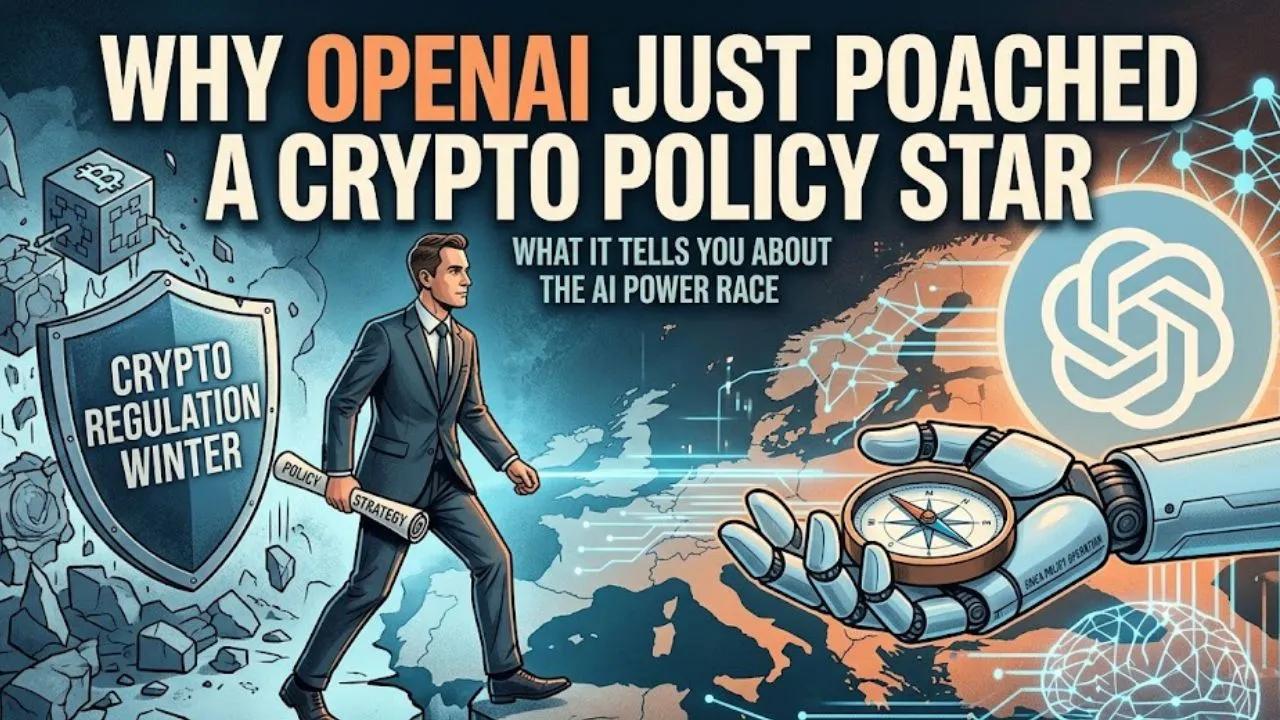
When Tom Duff Gordon left Coinbase to take a position with OpenAI, the technology sector should have taken notice
When Tom Duff Gordon left Coinbase to take a position with OpenAI, the technology sector should have taken notice; it wasn't just another employment change. It was a sign to look forward.
Duff Gordon spent almost four years with Coinbase, working as Vice President of International Policy, which meant that he was actively involved in helping one of the most highly scrutinized companies in the history of finance get through and deal with government regulators in many different countries around the world. Not only did he endure the crypto winter but he aided in supporting
Coinbase during that period while governments around the world were sharpening and preparing to strike out against crypto. Now, OpenAI desires to have that same skill set and for that person to manage their entire policy operation for EMEA. Ask yourself, why now? Why him? And what does this tell you about where AI is going?
The Quiet War Nobody Talks About
Most AI news comes from product launches, ChatGPT updates, new models rolling out, and viral demos that break the internet for 48 hours. But the real competition is happening in Brussels, Westminster, and all of the other government offices, where suits make the decisions about what AI businesses can actually do.
OpenAI knows this, more than anyone else, given that they've had congressional hearings, the EU AI Act, Zillions of regulatory requests to try and figure out how to regulate will, and rapidly growing pressure from all of these regulators who don't even understand the technology they're regulating. Because of this, OpenAI is making a plan to hire not just a policy head; they're hiring a diplomat who has experience dealing with regulators and can successfully navigate regulations for OpenAI and their partners. This is a very specific type of person and very hard to find.
Three Reasons This Hire Changes Everything
1. Crypto provided the painful lessons that AI will soon learn
Starting somewhere around 2021, the crypto world walked directly into a 'regulatory buzzsaw'. Governments were having a freakout moment and established rules on the fly. The companies that survived had a smart and patient policy team who could take the complexity of their technology and effectively communicate with law makers.
When you think of what we are seeing with AI now? It is a similar situation.
Duff Gordon lived through all this chaos at Coinbase and knows what it feels like to have regulators knock at the door without any playbook. More importantly, he knows what to do when that happens.
2. The most complicated battleground for OpenAI is EMEA
The European Union (EU) is not playing games either. The EU AI Act has been enforced and is now in play. The UK is establishing its own regulatory environment in the post-Brexit world. The Middle East and Africa are emerging as key growth areas, and they have distinct political environments.
To manage all the many moving parts will require someone who has a global view but operates on the ground.
3. Talent migration is a signal of where the real money is
This is definitely something to watch closely. The migration of top-tier policy professionals from high-paying jobs in crypto to employment with AI companies reveals the direction of institutional market weight moving forward.
What This Means for You
No matter who you are — an investor, founder, or professional keeping an eye on how AI evolves, or someone who wants to learn and wonder where things are headed — this hire is very important for what you’re doing.
The winners of the next decade of AI won’t likely be companies that just have great AI models. Instead, they will be corporations that manage to operate within the confines of regulatory frameworks and not lose their essence or speed.
This is what OpenAI is currently working on developing for future use — deliberately and at a high cost.
If you are building something in AI or advising people who do, you should start to view the way you think about policy as similar to how you think about product. Policy is not just a box to check, but an advantage over your competitors.
The founders who grasped this concept early on in the crypto world are the ones still left standing today.
The Pattern Is Clear — Are You Watching It?
Keep that first bullet point top of mind — these are not simply job changes.
So let's bring this full circle by noting that the most successful technology companies have always been the ones that identify the next theatre of war before anyone else has an opportunity to react. openai is not passively waiting for a change in international policy, they are proactively recruiting, and investing in, and preparing for that change.
Tom Duff Gordon is just one part of this bigger chess game.
The movement of talent out of crypto and into ai, and the speed at which it is occurring, will only continue to grow. The regulatory barriers to this movement are continuing to increase, and the companies who are developing serious public policy infrastructure now, will find themselves with an enormous advantage when these barriers will become inescapable.
Start looking closely at who is moving, where they are moving to, and the reasons behind that movement.
Because in technology the companies that follow the talent will not continue to be surprised.